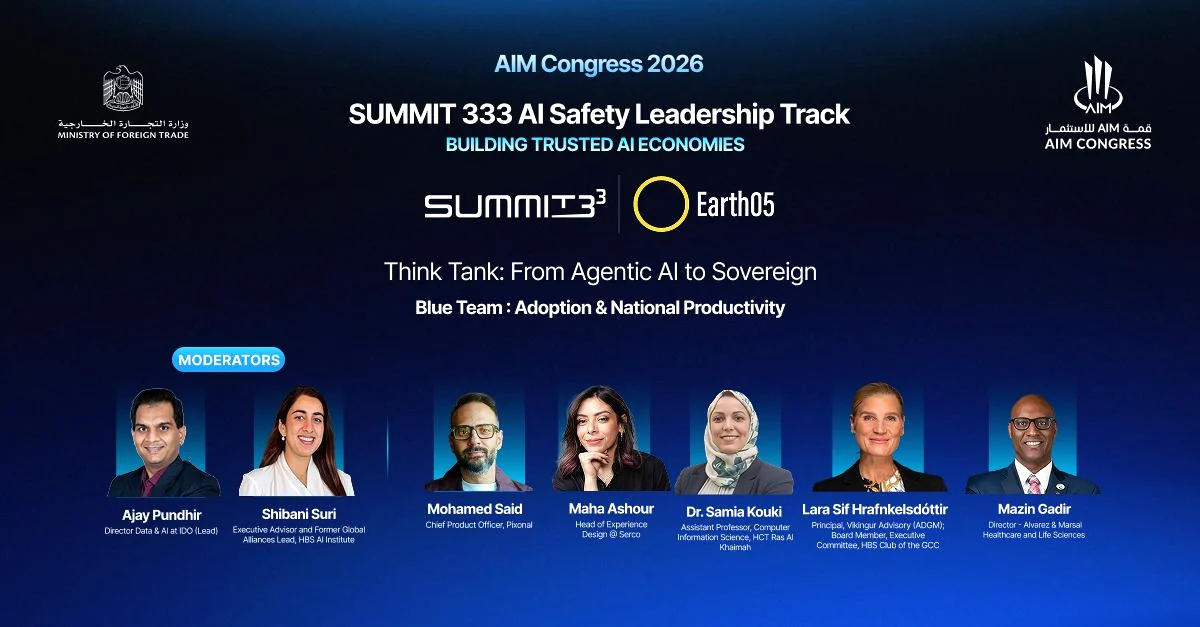
SUMMIT 333 AI Safety Leadership Track / Building Trusted AI Economies
Beyond Headcount Reduction: What a Trusted AI Economy Should Actually Deliver
A first-person reflection on moving from agentic productivity to national capability — and why trust, accountability and human outcomes have to scale with AI.
On this page
- The question is no longer just whether AI increases productivity
- Adoption without capability can become a hollow win
- Autonomy can increase; accountability cannot disappear
- Design for when systems fail, not only when they succeed
- The UAE opportunity: scale intelligence and human capability together
- Questions worth carrying into implementation
The outcome is not simply how much work AI can do for us, but what people become more capable of doing because AI is there.
The question is no longer just whether AI increases productivity

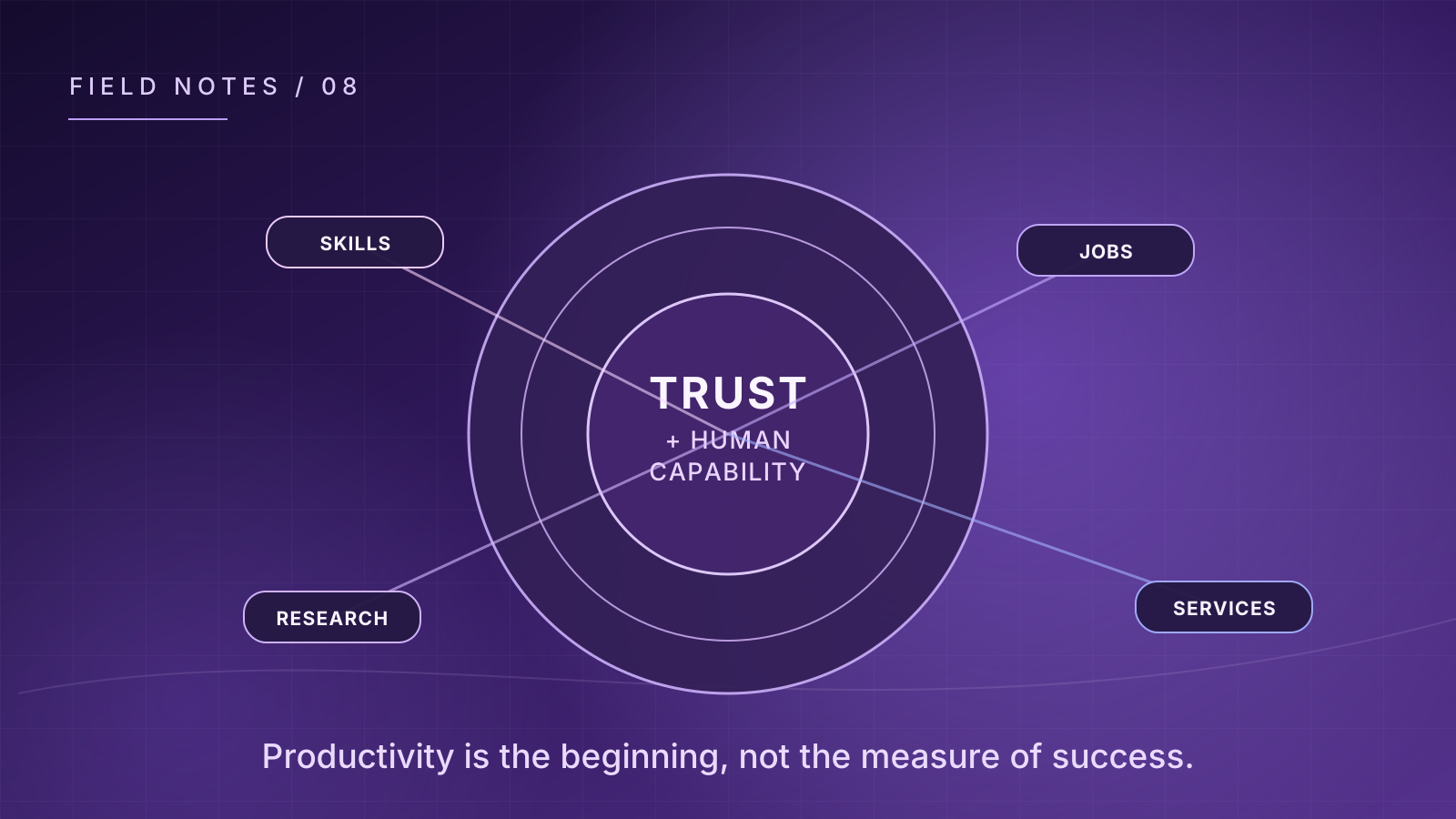
At the SUMMIT 333 AI Safety Think Tank at AIM Congress, I joined the Blue Team on Adoption & National Productivity. Our working question was deceptively simple: if agentic AI makes organisations dramatically more productive, how do we ensure those gains become national gains in skills, jobs, growth and better services, rather than simply reductions in headcount?
That question stays with me because it changes what success looks like. An organisation may automate a process, reduce its cost and still leave a much larger opportunity untouched. The more important question is what the time, resources and capability released by automation enable us to build next.
For a trusted AI economy, efficiency should be the beginning of the conversation, not its conclusion.
Adoption without capability can become a hollow win
When productivity is measured only through the work removed, we risk overlooking the capabilities that make those gains sustainable. We need to ask whether people are learning to work with intelligent systems, whether jobs are being redesigned with care and whether institutions are creating the conditions for new ideas and research to flourish.
Upskilling should not be an afterthought to deployment. Nor should adoption be treated as a communications campaign. It requires a clear understanding of how work changes, where human judgement remains essential and what support people need to participate confidently in that change.
One point I took from the Blue Team discussion is that national productivity compounds when adoption creates more capable people and organisations, not just leaner processes.
Concept model
Turning AI productivity into national capability
Trusted AI economies should compound human opportunity as well as efficiency.
Select an idea to read how it fits. These are qualitative ideas, not data.
01 / 05
Productivity
Release capacity through better processes and services.
- 01 Productivity Release capacity through better processes and services.
- 02 Skills Invest in people who can use and shape AI.
- 03 Opportunity Redesign work and create conditions for growth.
- 04 Accountability Give consequential AI actions clear human ownership.
- 05 Trust Make safety, auditability and public value visible.
Autonomy can increase; accountability cannot disappear
The wider Think Tank looked beyond adoption to the connected questions of sovereignty, infrastructure, trust, safety and resilience. Those conversations reinforced an important principle for me: the more autonomy we delegate, the clearer responsibility needs to become.
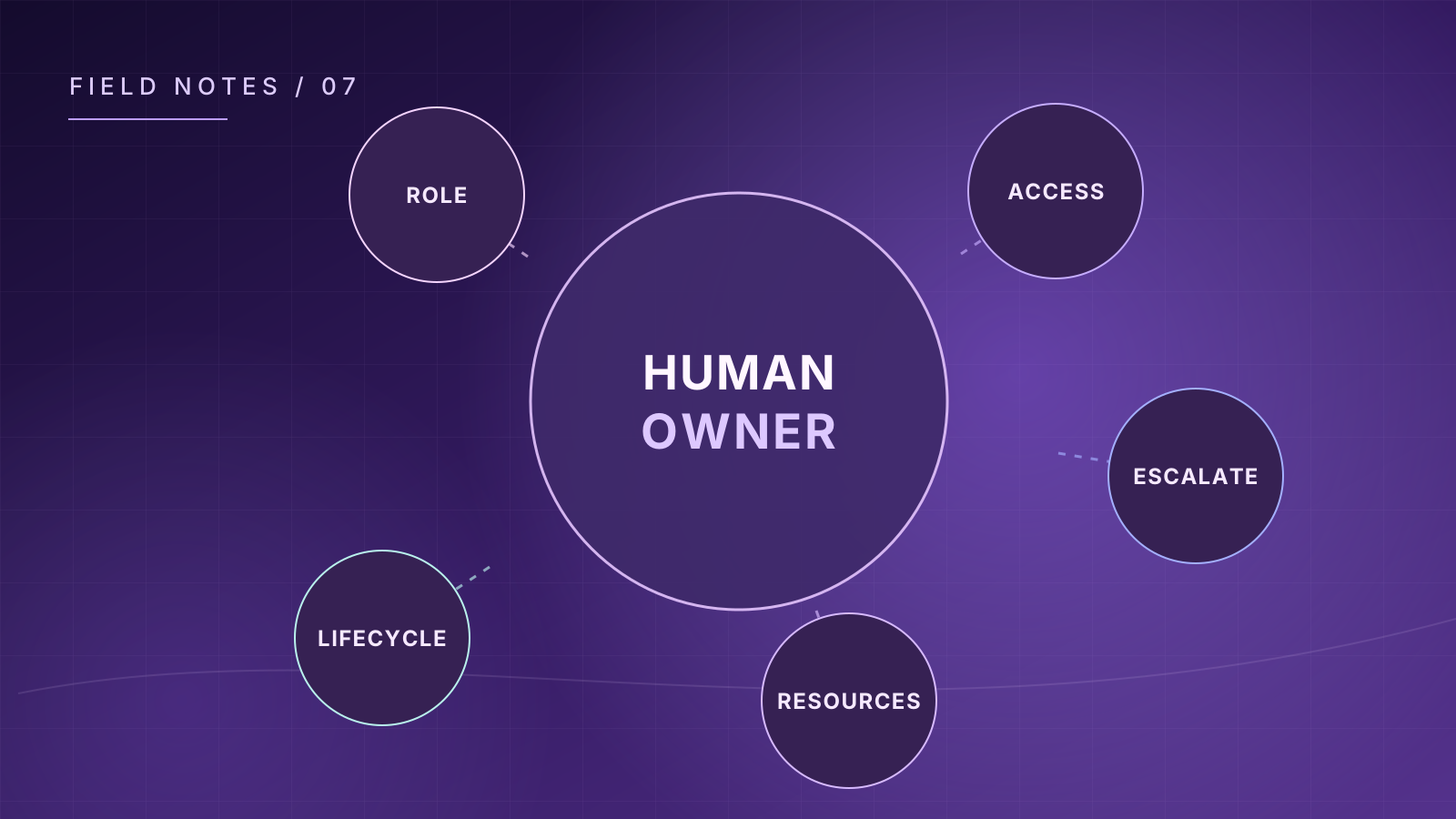
An AI system operating at scale needs a named human owner. This matters particularly when agents can access systems, make recommendations or initiate actions faster than people can review each step. Clear ownership should extend through procurement, deployment, monitoring and intervention.
Trust is not a governance document added at the end. It is an operating requirement that must be visible in the design of the service and the experience of the people relying on it.
Design for when systems fail, not only when they succeed

The wider room also explored how to establish a common minimum safety foundation, with safeguards adapted to the different risks of each sector. Discussions included auditable activity logs, the boundaries of human oversight and what autonomous agents should do when their primary protections do not work as intended.
These may sound like technical controls, but they have direct human consequences. Can someone understand what an agent did? Is there a safe way to challenge or reverse an action? Does the system stop, escalate or continue when it encounters uncertainty? And can an organisation learn from a failure rather than simply contain it?
For me, responsible experience design means treating these moments as part of the intended journey, not as exceptional cases outside the design brief.

The UAE opportunity: scale intelligence and human capability together
The Think Tank brought together perspectives from adoption, infrastructure and AI safety, with inputs intended to inform the development of a white paper on trusted AI economies. It was a reminder of the value of bringing practical, sometimes competing perspectives into the same room.
The UAE has an opportunity to connect AI investment and infrastructure with the human capabilities that determine lasting public value: education, research, better services, opportunities to grow and the confidence to engage with new technology.
The outcome I would most like us to measure is not simply how much work AI can do for us. It is what people, institutions and the economy become more capable of doing because AI is there.
Questions worth carrying into implementation
- Where will the productivity gains go, and how will we measure the public value they create?
- Which new skills, roles and research capabilities will investment in AI make possible?
- Who is accountable when an agent acts, and how will its decisions be audited?
- What happens when the system is uncertain, wrong or outside its authorised boundaries?
- How will we know whether people trust and benefit from the services we design?