RESPONSIBLE AI / AGENTIC AI / FUTURE OF WORK
When AI Agents Become Employees
Agentic AI is pushing governance beyond model risk and human protection. If agents are going to perform work, organisations may need to manage them more like a workforce than a software feature.
On this page
- What changes when an agent stops being just a tool?
- The digital employee lens changes the governance conversation
- AI does not burn out - but the ecosystem can
- Token governance is becoming an operating discipline
- Will organisations need Human/AI Resources?
- The design challenge is bigger than the technology
- Questions leaders should be asking now
- A broader definition of responsible AI
Responsibility cannot end at the model. It has to extend to the design of the work itself.
What changes when an agent stops being just a tool?
At the Agentic AI Innovators Forum in Dubai, one idea stayed with me long after the event: the suggestion that AI agents could be thought of as a new form of employee. Not because an agent is a person, or because it should be given human status, but because the way organisations deploy agents is beginning to look less like software installation and more like workforce design.
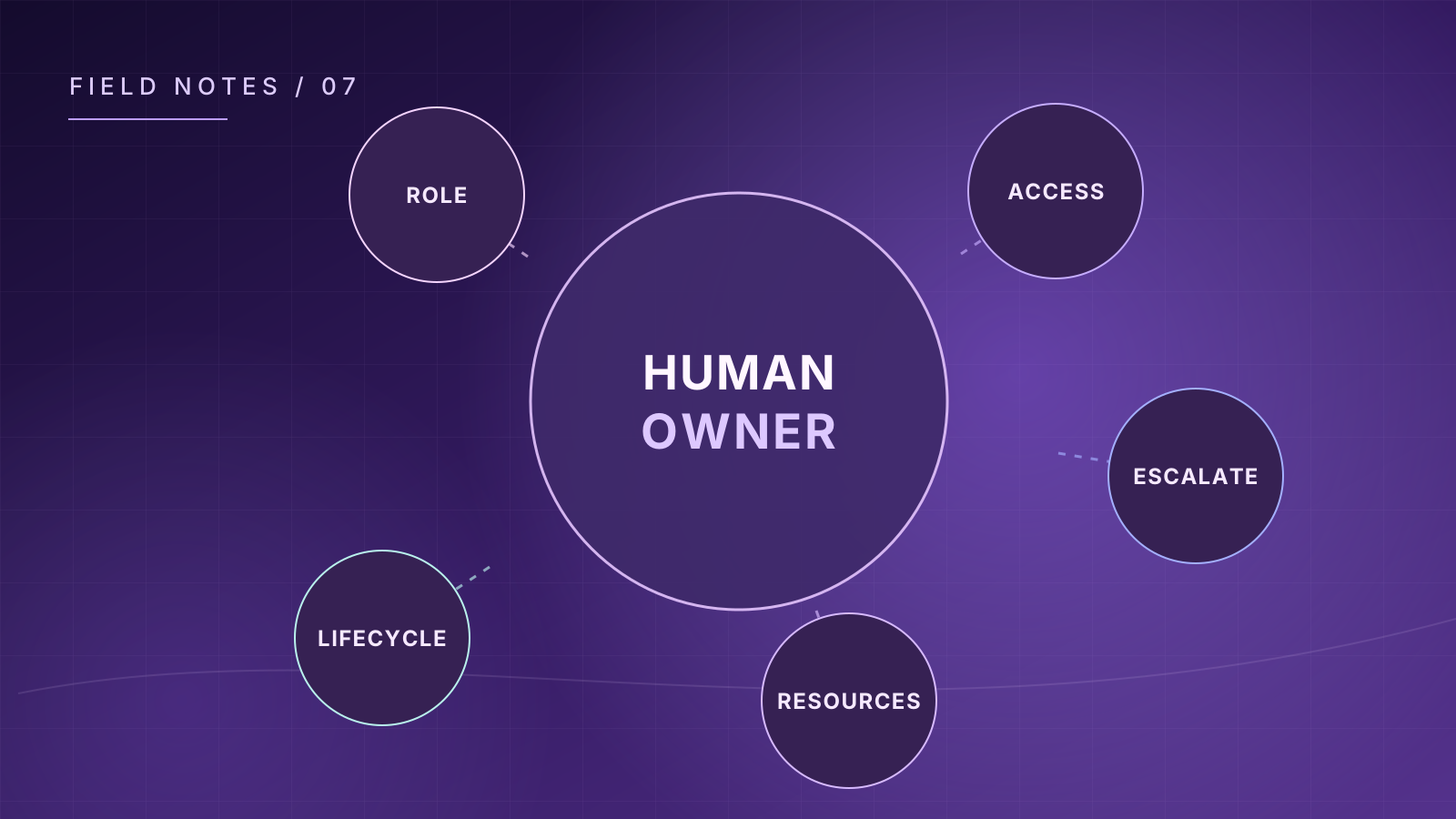
An agent can be given a role, access to systems, a set of responsibilities, a target to achieve and rules that define when it should escalate to a human. It can be evaluated on performance, cost, reliability and quality. It can be retrained, reassigned or retired. Once you look at agents through that lens, the governance question becomes much broader than: is the model safe?
The digital employee lens changes the governance conversation
Much of responsible AI has understandably focused on protecting people: privacy, bias, discrimination, transparency, safety and accountability. Those concerns remain fundamental. But agentic AI introduces another governance challenge: how do we manage a digital workforce responsibly and efficiently once it is operating inside the organisation?
If an AI agent is allowed to act rather than simply advise, organisations need clarity around its identity, authority and boundaries. What is it allowed to access? What decisions can it make? What value is it expected to create? Who is accountable for its actions? When must it stop and ask for human judgement? And who decides when it is no longer fit for purpose?
These are not purely technical questions. They are operating-model questions, and many of them sound surprisingly similar to the questions we already ask when designing human roles.
Concept model
A digital workforce needs a full lifecycle
Agents need defined jobs, authority, measurement and retirement criteria.
Select an idea to read how it fits. These are qualitative ideas, not data.
01 / 05
Role
Specify the job to be done and intended outcome.
- 01 Role Specify the job to be done and intended outcome.
- 02 Permissions Limit systems, data and decisions an agent may access.
- 03 Oversight Make human accountability and escalation explicit.
- 04 Resources Set sensible cost and compute budgets.
- 05 Lifecycle Evaluate, improve, reassign or retire when needed.
AI does not burn out - but the ecosystem can
The employee analogy also led me to a more provocative thought: burnout. AI agents do not experience exhaustion or wellbeing in the human sense. But the infrastructure that enables them is not limitless.
Every unnecessary interaction consumes compute. Poorly designed workflows can generate excessive tokens and repeated calls. Hardware runs continuously, data centres consume energy and require cooling, and weak or inconsistent data can cause agents to produce unreliable outputs that trigger even more processing and human intervention.
So perhaps the useful question is not whether an AI agent can burn out. It is whether the system around it can become inefficient, expensive and unsustainable because we have designed the digital workforce badly.
Token governance is becoming an operating discipline
This is where the conversation about tokenomics becomes particularly relevant. Tokens are often treated as a technical cost line, but in an agentic environment they can become a governance signal. They tell us something about how much computational effort a task is consuming and whether the workflow has been designed efficiently.
A well-governed agent should not simply deliver the right answer. It should deliver it within appropriate limits of cost, time, data access and environmental resources. That creates a new layer of questions for leaders: what is a reasonable resource budget for a task? When does agentic automation stop being economically sensible? Which work genuinely requires a sophisticated model, and which work can be handled by simpler automation?
Responsible AI, in that sense, is not only about preventing harm. It is also about preventing waste.
Will organisations need Human/AI Resources?
I do not expect HR departments to start issuing employee IDs to AI agents tomorrow. But the underlying concept is useful. As digital workers become embedded into enterprise processes, their lifecycle will need active management across technology, operations, risk, finance and people functions.
We may eventually see a new management layer responsible for a mixed workforce: people, agents, automation and systems working together. Its job would be to define roles, permissions, performance expectations, escalation rules, resource budgets, audit trails and retirement criteria for digital workers - while designing the human roles around them at the same time.
Whether we call that Human/AI Resources, AI workforce governance or something entirely different is less important than recognising that someone will need to own it.
The design challenge is bigger than the technology
For me, this is where design thinking becomes relevant again. The challenge is not to ask where we can insert an agent. It is to understand the work, the outcome we are trying to achieve, and the relationship between people and technology that will produce that outcome responsibly.
That means designing the digital role before selecting the technology: define the job to be done, the decisions involved, the data required, the risks, the human touchpoints and the measures of success. Only then should we decide what level of autonomy makes sense.
Agentic AI may change how work is organised, but good service and operating-model design still starts with the same question: what are we trying to achieve, for whom, and under what constraints?
Questions leaders should be asking now
- Which tasks are suitable for an AI agent, and which should remain human-led?
- What identity, permissions and decision rights should each agent have?
- How will agent performance be measured beyond speed and output volume?
- What limits should be placed on token use, compute cost and access to data?
- Where is human review mandatory, and who remains accountable for the outcome?
- How will agents be monitored, improved, reassigned and eventually retired?
A broader definition of responsible AI
The idea of AI agents as employees is deliberately provocative, but that is why it is useful. It forces us to stop thinking about agents as isolated pieces of technology and start thinking about the organisational system they are entering.
The next phase of AI governance may therefore need to protect people from poorly governed AI while also governing the way organisations deploy, consume, evaluate and optimise their digital workforce. If agents are going to become part of how work gets done, responsibility cannot end at the model. It has to extend to the design of the work itself.