NEXTGEN / Scaling Embodied AI & Humanoid Robotics
From Demo to Deployment: What Humanoid Robotics Teaches Us About the Future of Work
The most important robotics question is no longer whether a machine can perform a task once. It is whether it can perform it reliably, safely and economically every day.
On this page
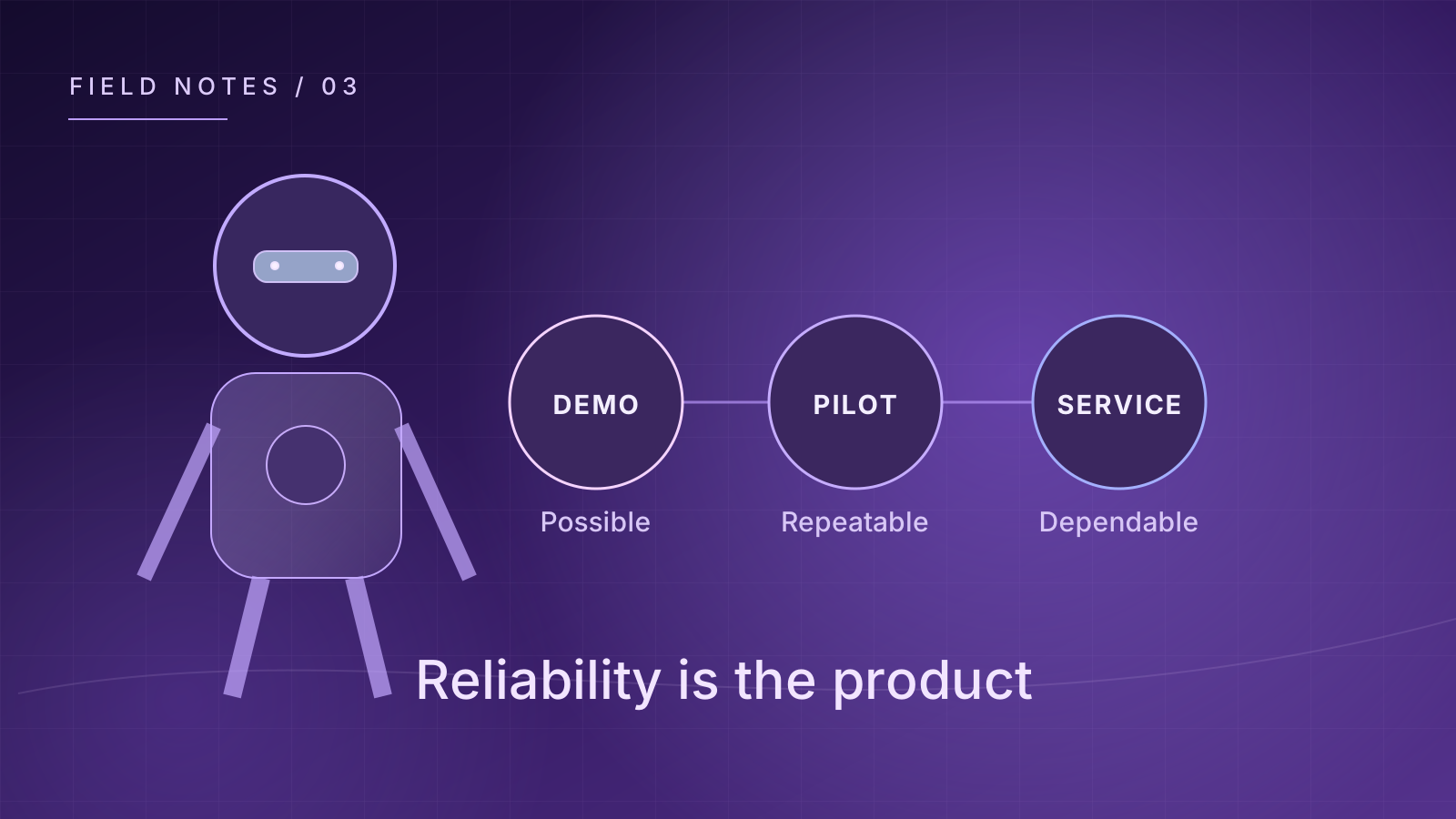
A demo proves that something is possible. A product proves that it can work reliably every day.
The robotics conversation is becoming operational
Humanoid robotics is easy to discuss as spectacle. A robot walks, speaks, picks something up, or interacts with a person, and the natural reaction is to focus on what the machine can do. The more interesting message from the AIM Congress session was almost the opposite: the demo is the easy part.
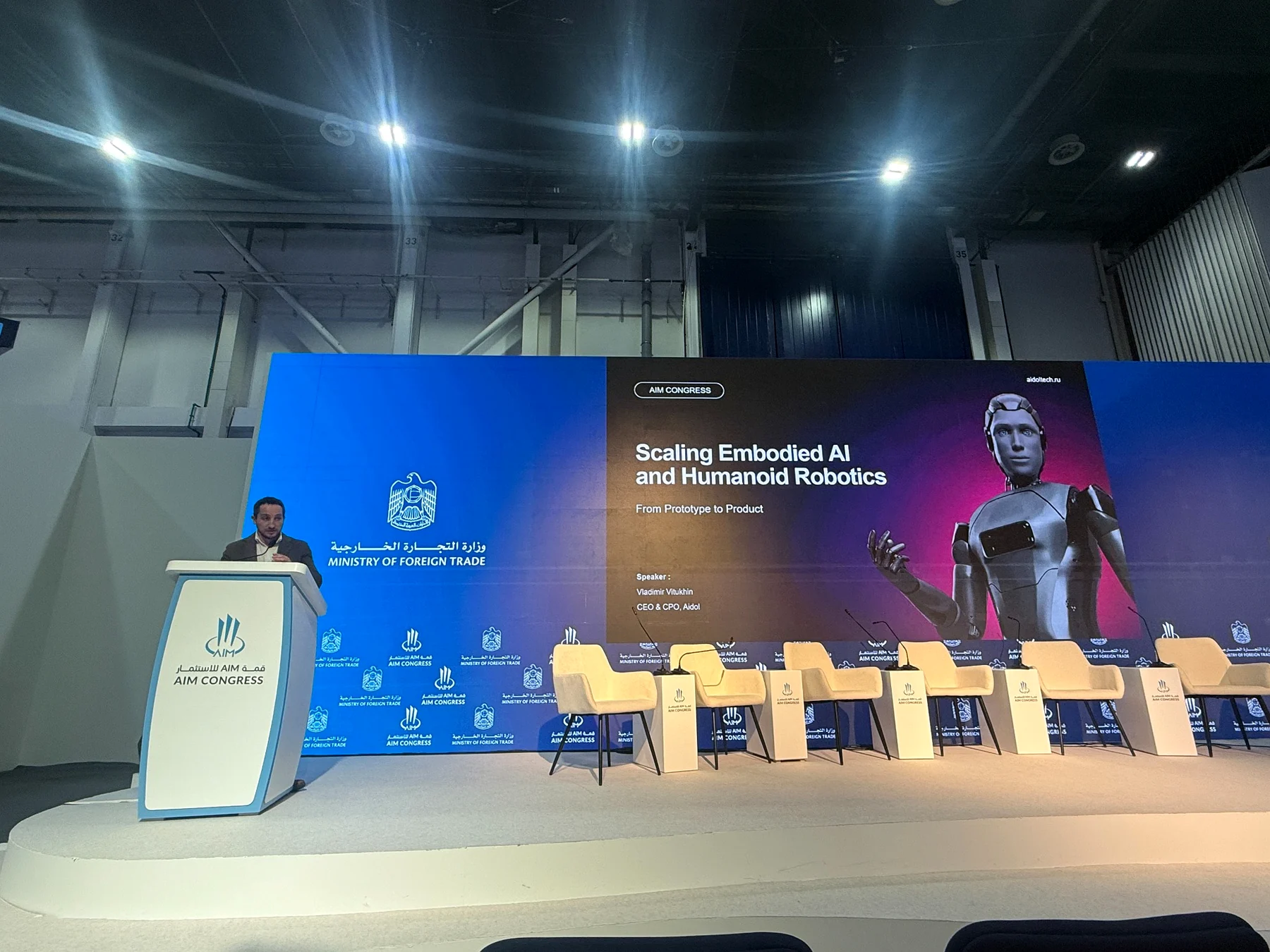
Aidol presented a universal robotic platform designed around three broad capabilities - movement, object manipulation and interaction with people. What mattered most, however, was the transition from prototype into real customer environments. The examples shown included medical-centre intake, visitor support in a city park, residential concierge services and a planned deployment to Japan.
Reliability is the product
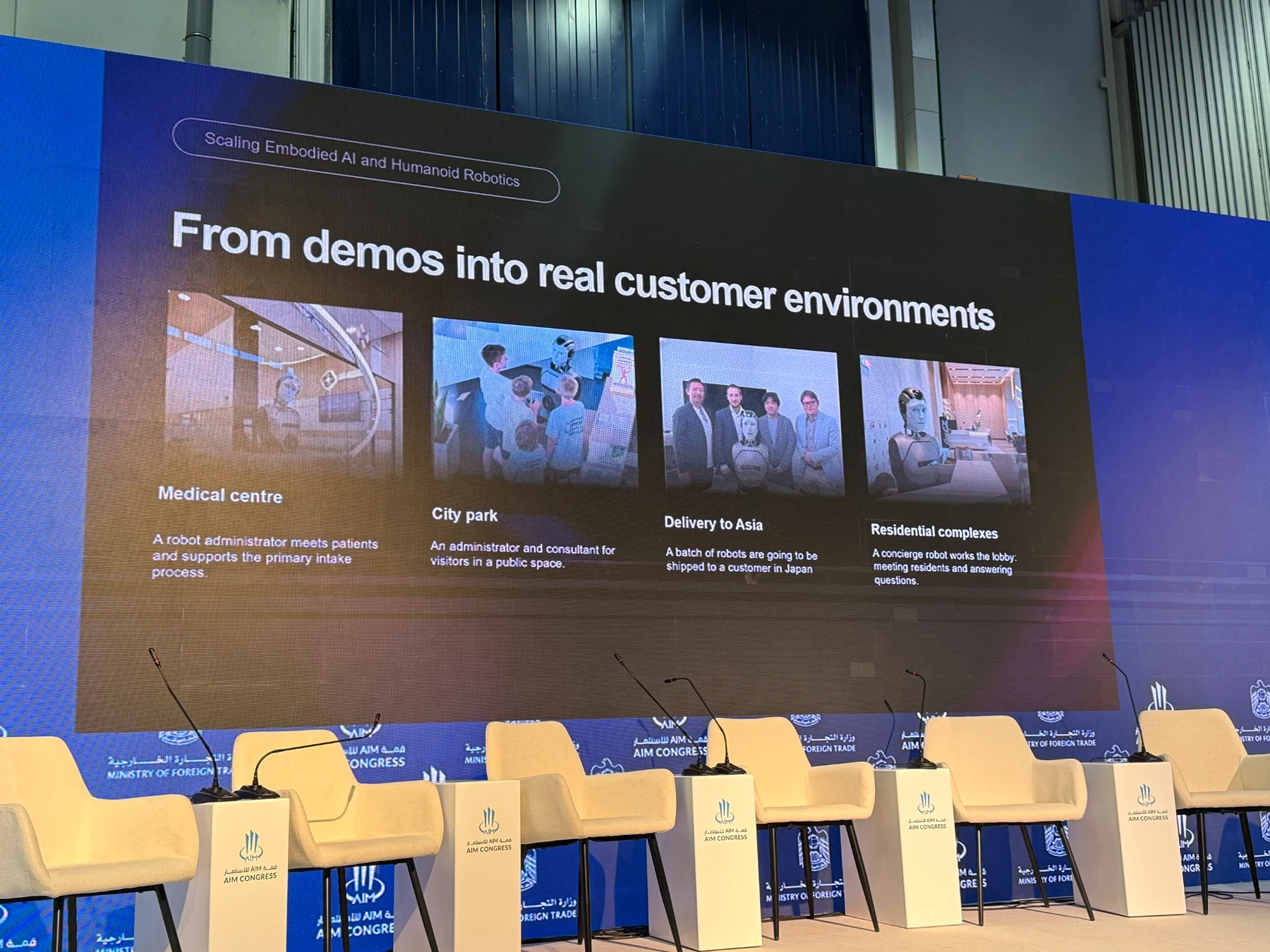
The speaker made a useful distinction between a demonstration and a product. A demonstration proves that a task can be done. A product has to repeat that task reliably, economically and under the imperfect conditions of everyday operations. The speaker estimated that around 80 percent of the work sits in the invisible engineering required to make that performance consistent.
This is why the company described pilots around real customer workflows rather than generic demonstrations. The task is broken down, success measures are defined and the robot is tested against those measures. The session notes cited success rates in the range of 80 to 95 percent depending on task complexity. The point is not the number itself; it is the discipline of measuring the robot as part of an operation.
Examples shown of robots moving into real customer environments, including medical, public-space and residential settings.
Concept model
The journey from demonstration to dependable service
The operating system around a robot is as important as its physical capability.
Select an idea to read how it fits. These are qualitative ideas, not data.
01 / 05
Demonstrate
Prove the task is technically possible.
- 01 Demonstrate Prove the task is technically possible.
- 02 Define work Choose a real workflow and measurable outcome.
- 03 Pilot Test reliability in everyday operating conditions.
- 04 Integrate Connect the system with people, software and support.
- 05 Scale Evaluate whole-life economics and consistent delivery.
The customer is buying an outcome, not a robot
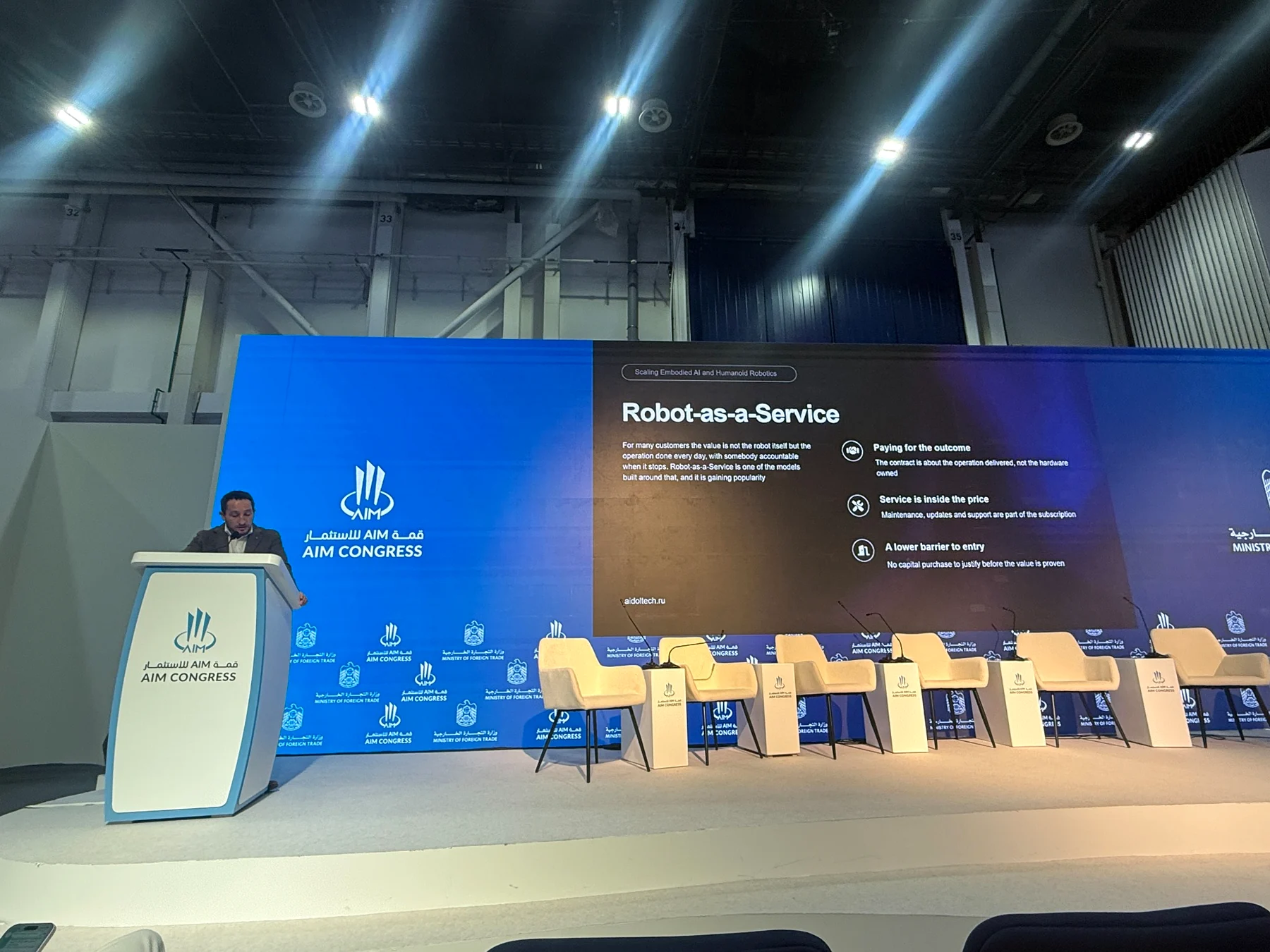
The Robot-as-a-Service model was one of the most commercially relevant ideas in the session. Instead of asking a customer to buy a piece of hardware, the model asks them to pay for the operation being delivered. Maintenance, updates and support sit inside the service, and the upfront capital barrier is lower.
That changes the business case. The customer no longer has to become a robotics expert or carry the full risk of owning a rapidly evolving asset. The provider has a stronger incentive to keep the system performing. More importantly, the conversation shifts from 'Do we want a robot?' to 'Is there a task where this service can deliver a better outcome?'
Scaling also means integration
The Q&A made another point explicit: a robot is not a self-contained novelty. Fleets can be managed centrally, behaviours customised, and robots integrated with enterprise systems such as CRMs and ERPs. The company also relies on local partners for distribution in markets including Japan and the UAE. Scale therefore depends as much on integration, support and partnerships as on the robot itself.
Robot-as-a-Service shifts the commercial model from owning hardware to paying for an operation delivered.

The real opportunity is service redesign
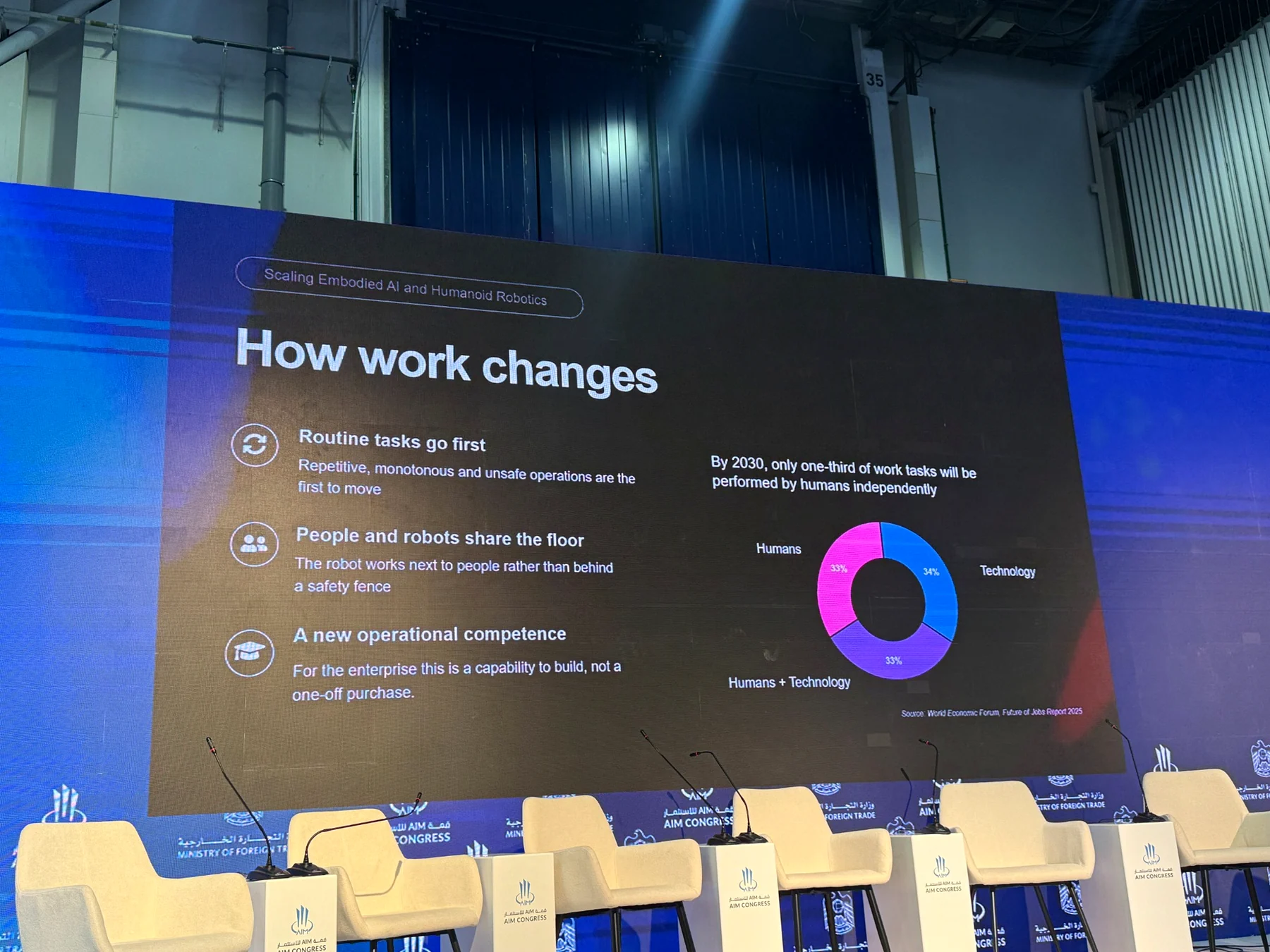
For me, the most useful implication is not 'where can we put a humanoid robot?' It is 'which parts of a service are repetitive, unsafe, inconsistent or difficult to scale, and what is the right combination of people and technology to improve them?' That is a service-design question before it is a robotics question.
In environments such as concierge services, customer intake, logistics and higher-risk operations, robotics could become one component of a broader service. The strongest models will be the ones that define the task, the human-machine hand-off, the expected outcome and the support model first - then choose the technology that can deliver it.
Five ideas worth carrying forward
- Start with a real operational task, not the novelty of the robot.
- Measure reliability and economics, not just technical possibility.
- Use service models to reduce the risk of hardware ownership.
- Design the human-machine workflow explicitly.
- Treat robotics as an operational capability that integrates with existing systems and improves over time.