NEXTGEN / Capital with Conviction: How Investors Are Rethinking Startups
Capital With Conviction: Why the Best Investors Bring More Than Money
In a slower, more selective funding market, founders need trust, judgement and access - not simply a cheque.
On this page
When capital becomes slower and more selective, the quality of the relationship around the capital becomes more important.
A tougher market changes the definition of a good investor
The fundraising environment described in the NextGen session was markedly different from the high-velocity market many founders became used to during the pandemic years. The panel said the median time to raise a Series A had stretched from roughly three months to around twelve. One investor described reviewing about 15,000 companies to make 150 investments.
That level of competition changes the job of a founder. A strong company is not enough; the story has to be clear, differentiated and credible. It also changes the job of the investor. When fundraising takes longer and uncertainty is higher, the most useful investor is not simply the one with capital, but the one who can help a founder navigate the next stage of the business.

The 2 a.m. test is really a trust test
One of the simplest ideas in the session was also the most revealing: would a founder feel comfortable calling their investor at 2 a.m. with their biggest problem? The point was not availability for its own sake. It was whether the relationship is strong enough for the founder to share bad news early, ask for help and receive useful judgement rather than theatre.
That is an important counterweight to the way founder-investor relationships are often presented. Good governance depends on transparency, and transparency depends on psychological safety. If founders only bring polished updates, both sides lose the opportunity to solve problems while they are still manageable.
Concept model
What capital should bring beyond money
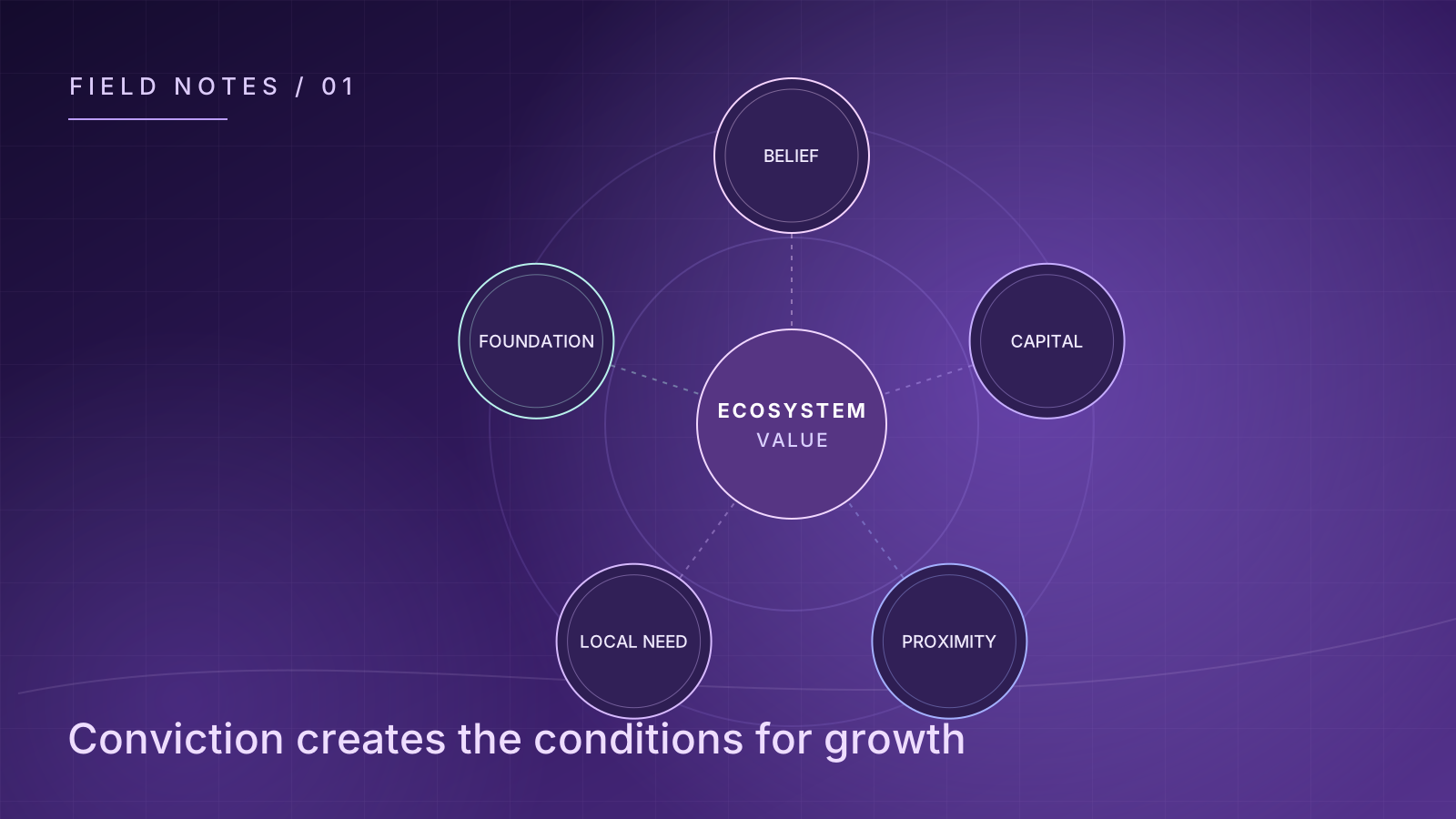
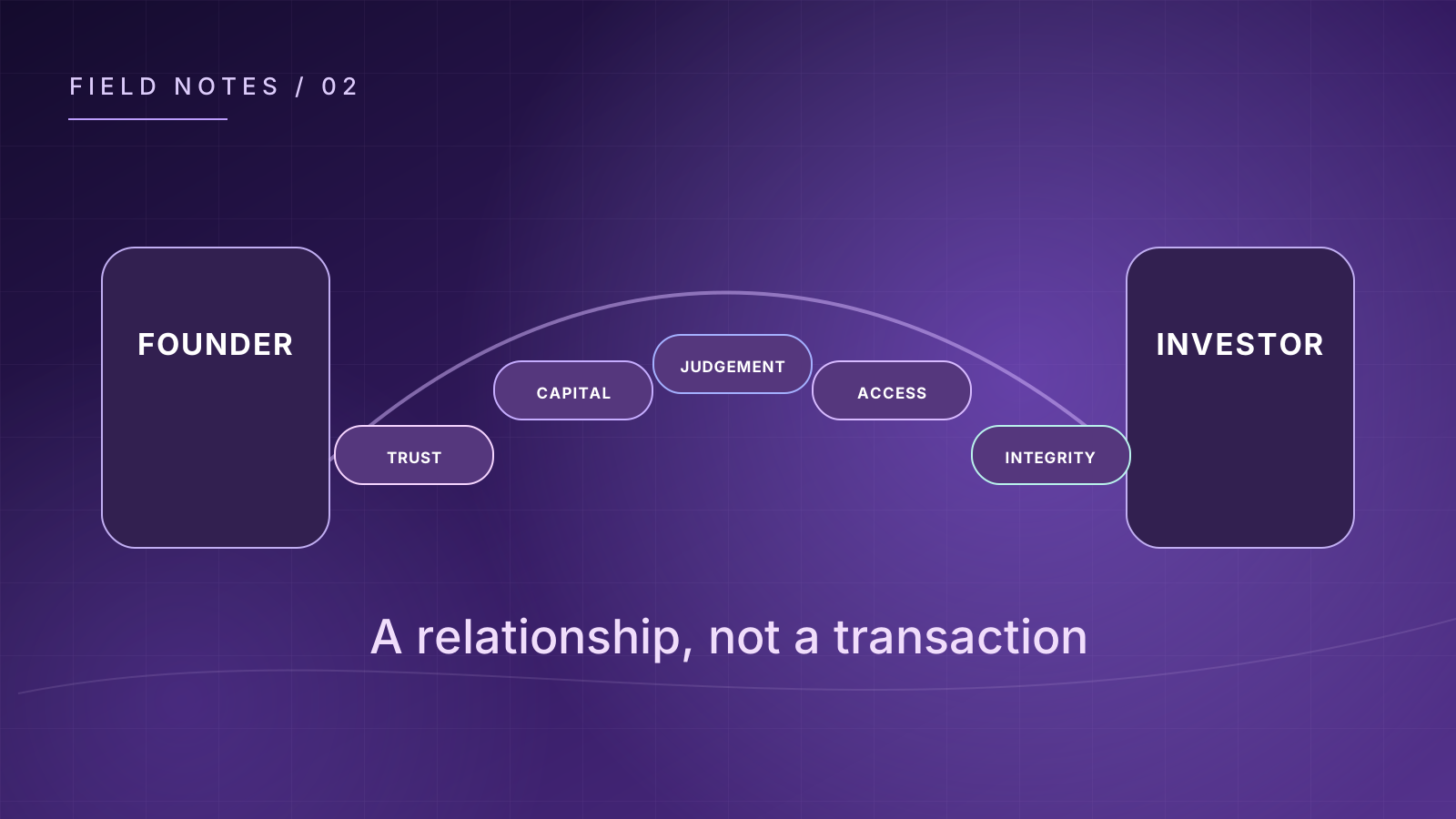
Good investment partnerships connect financing with judgement, access and trust.
Select an idea to read how it fits. These are qualitative ideas, not data.
01 / 05
Capital
Finance the runway necessary to build and learn.
- 01 Capital Finance the runway necessary to build and learn.
- 02 Judgement Offer candid strategic challenge when decisions get difficult.
- 03 Access Open relevant customer, partner and operating networks.
- 04 Trust Make it safe to surface problems early.
- 05 Integrity Keep focus and principles intact through uncertainty.
Capital should come with capability
The investors on the panel described their role as evolving with the company. Early on, the support may be basic and highly practical. Later, it becomes coaching, introductions, strategic challenge and mentorship. The analogy used was raising a child: the support changes as capability grows.
For technical founders in particular, this non-financial support can be as valuable as the funding itself. Access to buyers, partners, experienced operators and trusted advisers can accelerate the transition from building a product to building a company. The panel also encouraged founders to ask for help rather than treating it as a sign of weakness.
Integrity and focus are still the filters
Despite the enthusiasm around AI and new investment themes, the panel returned repeatedly to very traditional qualities: integrity, focus and resilience. Both investors said they would walk away if a founder was willing to compromise integrity. That makes sense. Investment is ultimately a transfer of trust as much as capital.
The conversation on valuation was similarly grounded. Rather than chasing headline numbers, the advice was to look at funding history, the cash required for the next twelve to eighteen months and whether the valuation supports the runway the company actually needs.

AI interest is strong, but differentiation is harder
Despite the slower market, the panel said AI remains an active investment focus across both infrastructure and applications. That makes the market crowded rather than closed: capital is available, but a generic 'AI' story is not a differentiator. Founders still need a compelling problem, credible economics and a clear reason their team can win.
What this means beyond venture capital
I think these ideas are relevant beyond startups. Corporates, government entities and large service organisations increasingly work with startups as innovation partners. The same principles apply when selecting those partners: clarity of purpose, integrity, resilience and the ability to build a relationship that survives difficult moments matter more than novelty.
The best innovation partnerships are therefore not transactional sourcing exercises. They combine capital, access, operating context and coaching. They create a route for promising technology to become something that can survive real customers, real governance and real delivery conditions.
Five ideas worth carrying forward
- Expect fundraising and partnership-building to take longer.
- Choose investors and partners for judgement and network, not only money.
- Create relationships where problems can be surfaced early.
- Treat integrity and resilience as operating requirements.
- Ground valuation and investment decisions in the runway and capability actually needed.